Wednesday, February 20, 2013

Awesome African Daisies


One of our favorite flowers for bridging the gap between winter and summer is African daisies (Osteospermum). Their bright, daisy shaped flowers come in wonderful colors and the Symphony series (to the left and below) has purple centers.


African daisies in the Symphony™ series are very compact evergreen, flowering shrubs that originate from South Africa. These bloom all season, and produce striking daisies that may be in shades of orange, lemon yellow, apricot and white, depending on the cultivar. These contrast nicely with their dark green foliage.


Another variety that we enjoy is 'Nasinga Purple Spoon'. The tips of the lavender petals are cupped, giving the bloom a funky, spiked look. These flowers always get compliments.


A new variety we are trying this year is named 3D because of the distinctive shape of the bloom. A pom-pom shaped center of florets is surrounded by a double row of lighter colored petals. Unlike other African daisies, 3D stays open at night.

African daisies are drought tolerant and perform best in full sun and well drained, average soil, but they also prefer cool weather. In temperate climates like ours, this tender perennial is commonly grown as an annual bedding or container plant.


Thursday, January 31, 2013

Cheery Nasturtiums

Nasturtiums perfectly fill the gap between winter and summer flowers. They love the cool weather and produce loads of large, brightly colored flowers.


Nasturtiums have delighted gardeners for centuries with their brilliant flowers and round, apple-green leaves. Originally from Peru, these beauties have travelled the world since discovered by Spanish conquistadors in the 15th century. The original species sported orange, spurred flowers and pale green leaves. Now there are many types with various bloom colors and spotted, mottled or lovely blue-green foliage.

The flowers and leaves of nasturtium are edible, with a spicy, sharp flavor. Use shredded leaves or snipped petals in a salad of young greens for color and interest. Just be sure to carefully rinse the inside of the long spurs (like tails) trailing out behind the flowers.


Nasturtiums are easy to grow. Plant them in a sunny location with well drained soil. Do not over-fertilize as this causes foliage growth but inhibits flowering.

Once the weather starts to heat up, nasturtiums start to wane. Move them to a spot with afternoon shade and keep them well watered for best results.


Trailing nasturtiums make dramatic hanging baskets and leaving them in a basket makes them easy to move in and out to protect from freezes.

Saturday, January 26, 2013

Heavenly sweet peas


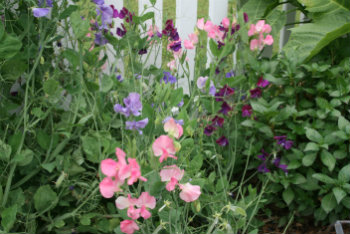
SWEET PEAS (Lathyrus odorata) have charmed gardeners since the early 1900’s. The spicy scent of the flowers is lovely and the plants bloom in many colors. We like to grow mixed colors that include shades of purple, rose, red, pink and white. The plants are climbers by nature and will scramble up a trellis or fence in no time.
 
 
They grow well in our climate during the spring and early summer producing an abundance of flowers. A morning sun location is ideal.
 
To keep your plants blooming cut off old flowers before they develop seeds. Sweet peas make long lasting, fragrant bouquets, so cut newly opened flowers to bring inside for fabulous flower arrangements. 
 
 
We now have 1 gallon plants to be put out in the garden now and a great selection of seeds which should be sown before the end of February. Sweet peas like cool weather so it is best to get an early start on them.

Wednesday, January 16, 2013

Spring Crops!


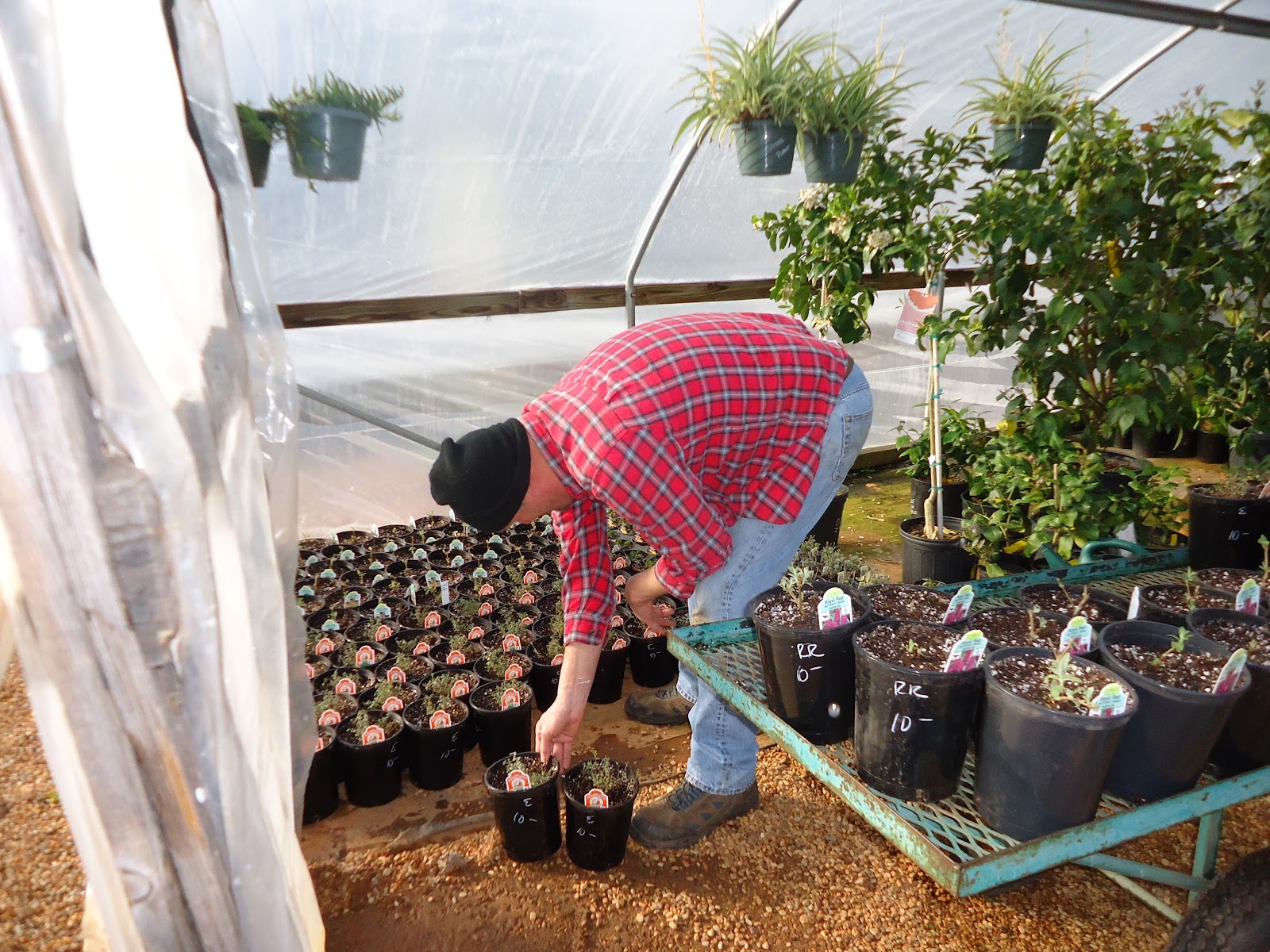
Winter life at the nursery is as busy as ever. We use this time to accomplish chores and pot all the baby plants we can in preparation for spring. Several times a week, herb and perennial shipments arrive and everyone gets involved in the process of planting. Chris sows seed weekly and cuttings are done every morning. We all dress in layers with lots of hats and scarves on the cold mornings.

Kendel is enjoying the work. Of course it's always fun to plant and watch things begin to mature.


 Getting as many plants into the greenhouses as possible is a challenge. It seems like it doesn't take long and they are full.We start to run out of room each year right before spring starts.

Poppies are growing nicely and should be ready in just a few weeks.


Saturday, December 15, 2012

Gardening mush

We had our first hard freezes this week. Low temps in the 20s. Because the weather up to this point has been balmy, nothing was hardened off, so the plants took a hit.

The veggie garden looks the worst. We had just planted new lettuce and now it is mush. We will pull it up and start over again in early spring.


I don't usually plant snap peas in the fall but did this year. We harvested the first small crop and they were delicious, but that is all we will get. The vines hanging on the fence were destroyed in the freeze.


Even the arugula suffered damage. It usually isn't fazed by cold weather, but the drastic change in temperatures was too much for it. We can trim this back and it should recover.


The kohlrabi is totally unaffected. We had such a great crop this year we are trying lots of new recipes. I like it peeled, sliced and roasted, but it is also good sauteed in garlic and butter. Isn't it a odd looking vegetable? Like an alien lifeform in the garden.

Saturday, December 8, 2012

Light up the Holidays

Last weekend was my favorite event of the year - Luminations
 
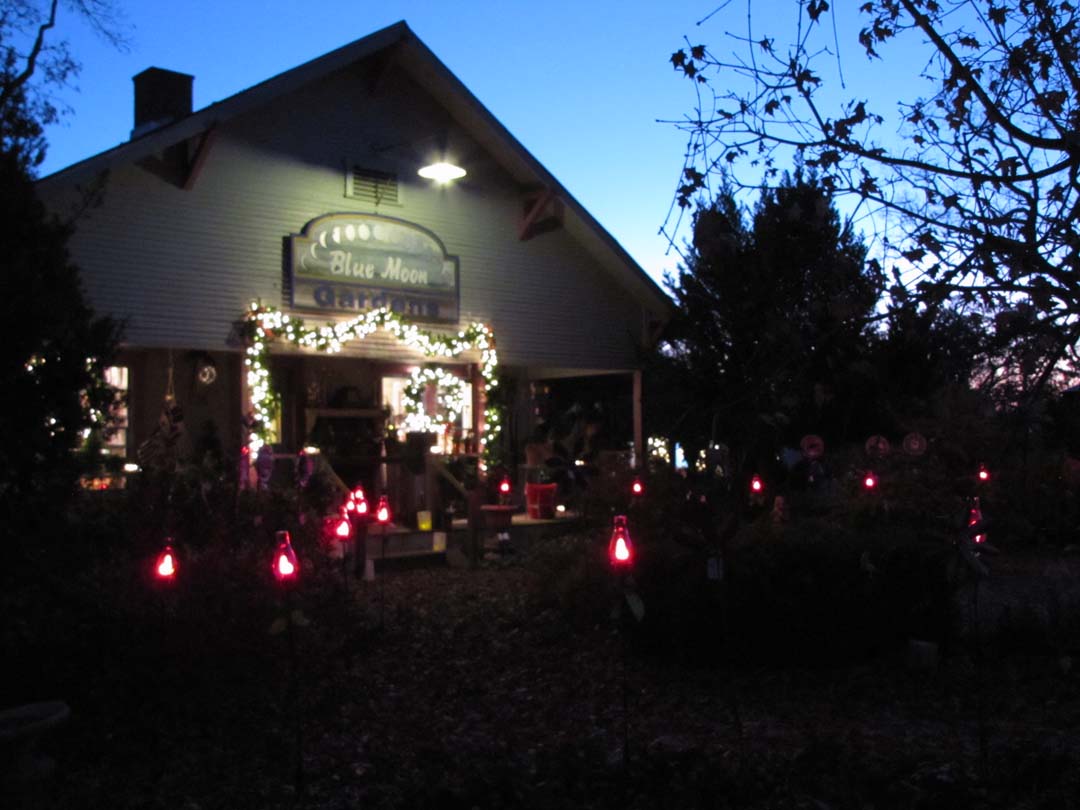
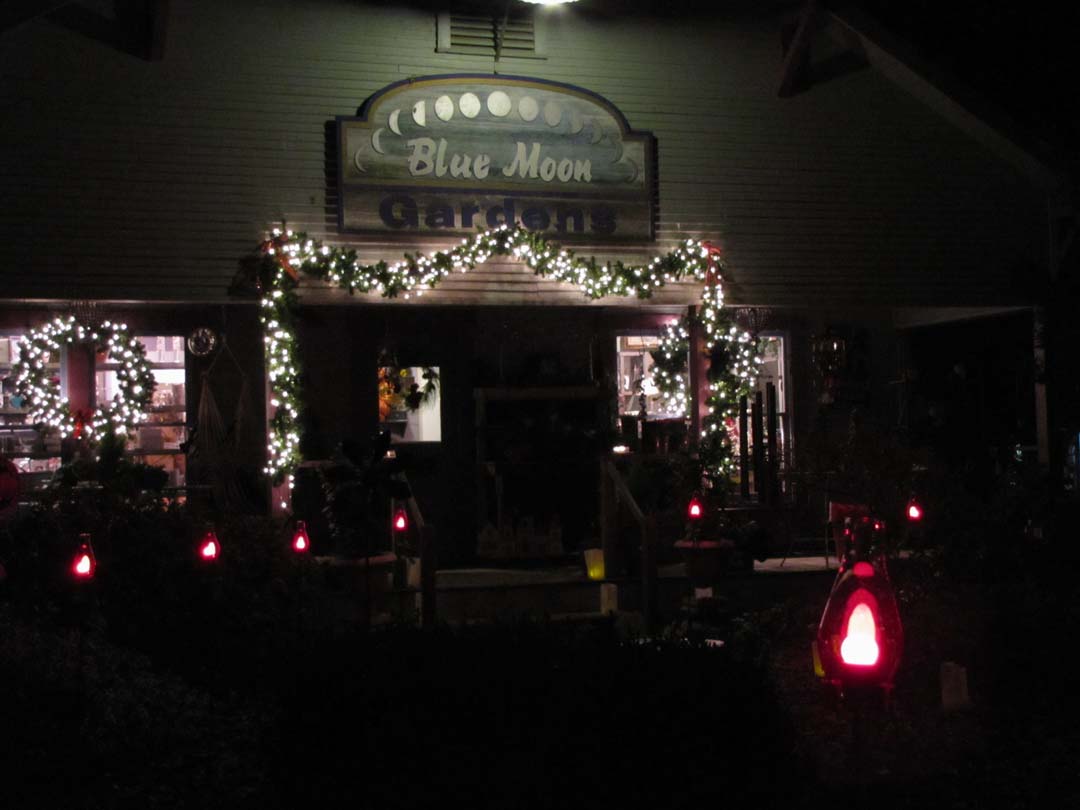
We light up the nurseries with hundreds of candles, luminarias and lights. Last year Kendel rigged us up the red lanterns in front. They are a nice touch.
 
 
Last year during the drought we also moved from real votive candles in our luminarias to battery opertated tea light to avoid any risk of fire. Not as bright as real flame, but much safer.
 
 
We missed the fire in the outdoor fireplace this year, but it was too dry, breezy and warm (62 degrees at 7 p.m. on Dec. 1!) to have open flames.
 
 
Here is the front of the workshop building all lit up and decorated for the occasion. Everyone walked over here to pick up their free door swag we make from Douglas fir boughs and sprigs we cut from evergreens in our gardens.
 
If you have a holiday party this year, plan to include lanterns or luminarias in the front of your house to give your guest a warm welcome and a lit path to the door. You and they will appreciate the effect.

Saturday, November 17, 2012

Kale - rock star of the veggie world


Kale is the rock star of the vegetable world these days, but unlike many pop stars, it has no bad habits. Low in calories yet high in vitamins, minerals and anti-oxidants, it appears on menus and cooking shows in smoothies, soups, salads, even as baked chips. The good news for gardeners is kale makes a lovely plant for gardens and flowerbeds in cool weather. Plant it in the fall and early winter and you can enjoy the sight of colorful, textural foliage and the flavor of fresh greens all winter and spring.
 

How to Plant: Sow kale seed directly into the garden in fall. Drop seeds 3 to 4 inches apart in moist soil. Keep the soil consistently damp as the seeds germinate and the seedlings grow. Thin seedlings as they mature until plants are 12 to 16 inches apart.
           
Buy kale as young transplants to place in beds or containers later in the season. Buy plants that are still small or older plants in l-gallon containers or larger. Growth will be stunted if plants are grown in pots that are too small.
Hardiness: Kale is a biennial, meaning it will grow for 2 years before it flowers and dies. However, the leaves become tough and bitter and the plants unattractive in the heat, so kale is usually grown as a cool season annual, replaced in late spring.  Kale tolerates the usual winter temperatures of Texas without protection. If the temperatures drop into the low 20s, cover your plants with frost cloth or sheets until the cold spell passes.
Harvesting: The flavor of kale improves after a frost, and tender young leaves have the sweetest flavor. Kale sprouts leaves from a center stalk, or sends up loose clumps of individual leaves. Cut the older, outside leaves with a sharp knife so the newer leaves will continue to grow. Rinse the leaves thoroughly then allow them to sit for 5 minutes before cooking. Check the internet for recipes; kale is cooked by many different methods.
Varieties: There are several types of kale and many different varieties. Try them all to discover which grows and tastes best to you.
  • Ornamental kale grows into colorful, rounded heads of foliage popular as bedding plants in cool season plantings. The best variety for our area is ‘Peacock’ kale.
  • Scotch kale has lovely, curled leaves growing up to 24 inches tall. ‘Redbor’ is very popular in landscapes with pink leaves turning deep purple in cold weather. ‘Winterbor’ has the same structure with steely blue leaves. Both are very cold tolerant.
  • Siberian kale has flat leaves with highly serrated edges. Most common in our area is ‘Red Russian’ whose gray leaves turn burgundy red as the season progresses. This is the least cold-hardy type.
  • Heirloom kale, also called Dinosaur kale, has upright, blue-green, bumpy leaves. Sold under the names ‘Lacinato’, ‘Nero di Tosca’, ‘Tuscan Black’ or ‘Dinosaur’ it is the most heat and cold tolerant and said to be the most flavorful kale.


Friday, November 2, 2012

Enjoying winter vegetable gardening


Every fall as days get shorter, afternoon heat wanes and cool mornings become the norm here in East Texas, my vegetable gardening excitement rises. We love fall vegetable crops for three reasons: success with fall vegetables is really very easy, they are incredibly nutritious and they just taste great. The list of vegetables and herbs that thrive during the cool weather season is longer than you might expect. Many winter crops continue to give produce all season long, and many require little intervention during freezing weather.


 Start with lettuces and greens for your first success with winter gardening. Mix a pot with your favorite leafy treats. Oakleaf, bibb, butter crunch, and red sails are but a few of the lettuces that work nicely, along with spinach. Lesser known greens like arugula, tatsoi, mizuna or pak choi combine nicely with lettuces in a planting and in the salad bowl. Simply pick the outer leaves from your plants and they will keep growing. When freezing temps are expected, just bring your mixed pot indoors overnight or until warmer temps have returned.
 
 
Swiss chard and kale varieties are even easier because they can take temps well below freezing (and offer great ornamental value as well). In-ground crops such as Broccoli, cauliflower, kohlrabi, and carrots are also easy to grow during the winter.

When it comes to herbs there are a plethora of evergreen and cool weather performers. All of the holiday turkey seasonings such as sage, rosemary, thyme, parsley and oregano are among the winter herb stars. Don't forget cilantro, sorrel, salad burnet, dill and lavender love the cool months too.


Gardening in the winter is easy and enjoyable. The weather is more forgiving to both plants and people, water demands lessen significantly, there are fewer pests and winter plants thrive with just minimal care.

Tuesday, October 30, 2012

Art Glass in the Gardens

The Blue Moon Garden Club took a trip last weekend and visited the Dallas Arboretum. It was a perfect time to be there - the weather cooled off, the pumpkin display was installed and the Chihuly art glass exhibition was there.

We enjoyed seeing all the beautiful glass nestled in the gardens so artfully.
 
 
Jimmy Turner and his staff at the horticulture department of the Arboretum did a great job complementing the art work with the plantings. The view above shows blue and green spheres among bright orange marigolds. Makes me almost like marigolds. To the left is one of the first sculptures you see when entering the Arboretum. I loved the juxtaposition of the croton in the foreground to the red and yellow glass in back.
 
We were there during the day with hundreds of school children, much to our dismay, but they have nighttime showings, which would be lovely. The exhibit has been extended to the first of the year, so if you haven't seen it yet you still have a couple of months to fit it into your schedule. I recommend getting there late in the afternoon to see the glass and the gardens in the light, then staying after darkness falls to see the sculptures lit up.


I heard this tall sculpture is spectacular at night.

Thursday, October 4, 2012

New Season, New Plants

Finally, there is a hint of autumn in the air. Nighttime temps have dropped into the 60s and there is a rumor of highs in the 60s this weekend. For some, especially in Texas, this signals football or hunting season, but for Southern gardeners it proclaims the start of a fresh, new growing season.

So we are ripping up our warm season annuals in anticipation of planting cool season annuals.
 We started with two beds in front of the gift shop.
 
I thought you might want to see what we took out, as it was still looking pretty good at the end of summer.
This "Snow Princess" is the only alyssum we have every grown that will survive the summer in Texas. It is covered in flowers, but the foliage was becoming a little bare.
This is the second summer we have had the 'Diamond Frost' euphorbia, aka Texas baby's breath. It blooms dainty white flowers all summer long and survived last summer's severe heat and drought. It had gotten so big we had to dig it up with a shovel, we couldn't just pull it out.
Here is my plan for that bed now. This new snapdragon looks interesting: Arrow Orange. I got this picture from the breeders website. Think it is slightly color-enhanced? With Photoshop, you just can't tell exactly what they will look like in person.  Now is the best time to plant snaps. They will bloom and provide some color this fall. When the flowers fade, cut them off just down the the topmost set of leaves. They will stay green all winter (unless it is unusually cold), then burst into glorious bloom in spring.
 
I might combine them with Citrus Mix pansies, although if these photos are accurate representations of color, the oranges will clash. May have to pick out the orange pansies.
 
 
Ditto on these erysimums, wallflowers. I wanted to try them to see just how cold hardy they are, but may have to stick with the yellow only.
 

Saturday, September 29, 2012

A Fun Afternoon

  It was a perfect afternoon to spend making fairy gardens. The rain was pattering down outside and a nice rain it was. Slow and steady! 

 The girls did such a nice job on their gardens.
The gardens each had personality. It was fun and we did lots of laughing.